The Dosdall Laboratory uses a combination of mapping techniques to understand the tissue level substrate remodeling that occurs in conditions such as chronic atrial fibrillation, heart failure, and myocardial infarct that lead to dangerous atrial and ventricular arrhythmias. In combination with our clinical collaborators, we develop translational approaches to diagnose and treat these conditions.
Current Research Projects
- “The role of fibrosis distribution in abnormal atrial conduction patterns.” — NETF grant awardee
- “Novel Gene Therapy for Chronic Ischemic Heart Failure.” — NIH R01, 2024–2027
- “Antitachycardia pacing and improved lead for ventricular conduction system stimulation.” — NIH R01, 2015–2026
Meet the Dosdall Lab Team

Derek J. Dosdall, PhD
Associate Professor
Derek Dosdall, PhD, earned his BS in electrical engineering from Brigham Young University and his MS and PhD in bioengineering from Arizona State University, where he focused on cardiac electrophysiology, mapping, and arrhythmias. He completed postdoctoral training in cardiac electrophysiology research at the University of Alabama at Birmingham and joined the University of Utah in 2010.
His research focuses on remodeling in cardiac disease, with an emphasis on the physiologic changes that occur during ischemia and cardiac arrest, studied in preclinical translational models that closely mimic human cardiac disease.
His work has been supported by the National Institutes of Health, the Nora Eccles Foundation, and the American Heart Association. He and his team aim to make seminal discoveries that improve treatment options for patients with cardiac arrhythmias and heart disease.

Ava Yektaeian Vaziri
Research Assistant and PhD Candidate
Ava is a PhD student in Biomedical Engineering at the University of Utah, specializing in cardiovascular engineering, electrophysiology, and AI-driven cardiac signal analysis. Her translational research involves performing cardiac mapping in surgical settings and managing ECG telemetry pipelines. Additionally, she investigates the therapeutic effects of cardiac gene therapy, leveraging machine learning to detect conduction anomalies and discover predictive markers of myocardial infarction.
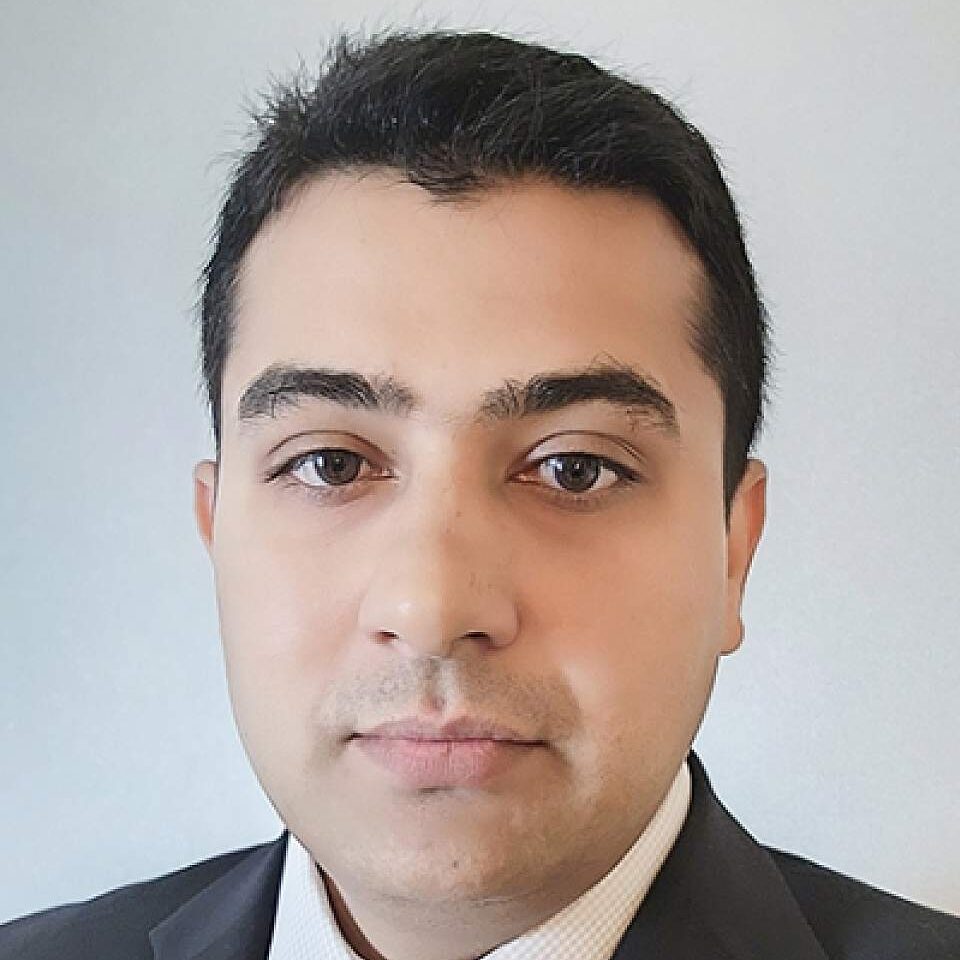
Muhammad Khan, PhD
Research Assistant Professor
Muhammad Khan, PhD, is a Research Assistant Professor in the Dosdall Lab, specializing in the development and characterization of translationally relevant animal models of human disease. His current research focuses on evaluating the therapeutic efficacy of bridging integrator 1 (cBIN1) gene therapy to treat both ischemic heart failure and right ventricular heart failure. Beyond his primary research, Dr. Khan plays a pivotal role in mentoring graduate students, fostering collaborative partnerships, and driving the lab’s academic publications forward.

Orvelin Roman, MVZ
Lab Manager and Veterinary Specialist
Orvelin serves as the Lab Manager and Veterinary Specialist for the Dosdall Lab, where he oversees daily laboratory operations, safety compliance, and research logistics. Leveraging his advanced veterinary background, he provides expert oversight for animal care, surgical protocols, and specialized experimental procedures. His dual expertise ensures a seamless, efficient, and high-standard research environment that crucially supports the lab’s scientific advancements.

Sofia Ruiz Castillo
Research Assistant and PhD Candidate
Sofia obtained her Bachelor of Science in Bioengineering from Rice University and is currently a fifth-year PhD student in the Biomedical Engineering department. Her work primarily focuses on investigating arrhythmogenesis with optical mapping in various models of heart failure. Sofia combines her strong engineering background with scientific investigation and medical research to elucidate causes of and treatments for cardiac arrhythmias.

Emmanuel Offei
Research Assistant and PhD Candidate
Emmanuel earned a BSE in Biomedical Engineering from the University of Ghana, Ghana, and an MS in Biomedical Engineering & Systems from Cairo University, Egypt, where he investigated the risk of in-stent restenosis associated with the deployment of a dual-layer stent in a diseased artery using computational modeling. He is currently a PhD candidate in the Biomedical Engineering program, and he joined the Dosdall lab in 2022 to investigate the therapeutic efficacy and safety of delivering anti-tachycardia pacing (ATP) to the ventricular conduction system. Emmanuel also has a keen interest in computational cardiology.

Ryo Nishinarita
Cardiologist and cardiac electrophysiology specialist

Laura Valentina Salazar Rojas
Undergraduate Student
Laura is a third-year undergraduate student majoring in Biomedical Engineering. In Dr. Khan’s lab, she studies electrical remodeling of the right ventricle using a translational model of ischemic heart failure. Her research leverages advanced electrical mapping techniques to pinpoint regions of low voltage and abnormal activation patterns associated with arrhythmias, contributing to a deeper understanding of cardiac electrical dysfunction.

Sakura Stankey
Undergraduate Student
Sakura is a third-year undergraduate student majoring in Biomedical Engineering. In Dr. Khan’s lab, she explores cellular electrophysiology by examining right ventricular membrane voltage and calcium transients in cBIN1 gene-therapy hearts, both with and without VT inducibility, in a translational model of pulmonary arterial hypertension. Her work advances understanding of the effects of cBIN1 gene therapy on cardiac electrical activity.
Calvin Rolston
Undergraduate Student
Calvin is a sophomore undergraduate majoring in Kinesiology with a pre-health emphasis. In Dr. Khan’s lab, he investigates cardiac pathophysiology with a special emphasis on fibrosis in remote regions of failing tissue. He also examines the role of the BIN1 protein in plasma, right ventricular, and left ventricular tissues affected by pulmonary arterial hypertension, aiming to elucidate mechanisms underlying structural remodeling.
Travvon Dahle
Undergraduate Student
Travvon is a third-year undergraduate student majoring in kinesiology at Utah State University and plans to attend medical school after completing his undergraduate degree. He is developing novel lead technology for cardiac pacemakers and implantable cardioverter defibrillators to capture the ventricular cardiac conduction system.
Mentorship and Training
Dr. Dosdall has a strong commitment to mentoring the next generation of scientists and physician-scientists.
More than 100 publications were authored by trainees or junior faculty under his mentorship and many of them were supported by competitive career development training grants. Ten of his mentees have moved on to independent faculty positions.
For translational and basic science research job opportunities please contact Derek.Dosdall@utah.edu(please include your CV and potential referees).
